
Oolong Roast Levels Explained: Light, Medium, and Dark Compared
Two oolongs can come from the same cultivar, the same hillside, even the same week of harvest, and still taste nothing alike. The difference often comes down to the roast. Roasting is the slow finish that turns a bright, floral leaf into something deeper — or stops just short of it, keeping the flowers intact. Learning to read roast levels lets you predict what a tea will taste like, how to brew it, and what to put on the table beside it.
What Roasting Actually Does
Roasting happens after oxidation and shaping, usually over charcoal or in an electric roaster. Heat drives off moisture, browns sugars and amino acids, and shifts the aromatics away from the fresh, green end of the spectrum toward toasted, nutty, and caramel notes. Three things move together: aroma gets deeper, body gets heavier, and astringency drops.
Roasting also dries the leaf further, which is why a well-roasted oolong holds up longer in storage than a light one. One clarification worth keeping in mind: roast level is not oxidation level. A heavily roasted oolong can be made from lightly oxidized leaf, and a barely roasted oolong can be quite oxidized. The two variables move independently, and confusing them makes every tasting note harder to trust.
Light Roast: The Floral End
A light roast is a light touch — enough heat to settle the leaf and remove raw greenness, not enough to build toast. What you get is perfume: orchid, lilac, gardenia, green apple, honeysuckle, sometimes a clean cream note underneath. The body is light to medium, silky, and the finish is crisp rather than sweet.
Taiwanese high-mountain oolongs such as Shan Lin Xi, modern Anxi Tieguanyin, Baozhong, and many Phoenix Dan Cong sit here. Brew them at roughly 90–95°C with about 4–5 grams per 100 ml of water, and give the first steep 30–40 seconds. Boiling water flattens the top notes, so keep it below a rolling boil. Dan Cong is the exception many drinkers make: it stands up to water just off the boil and rewards the extra heat.
Medium Roast: The Middle Ground
This is where most drinkers land, and for good reason. Medium roasting trades a little perfume for structure. Expect toasted almond, caramel, baked pear, brown sugar, and a warm spice note that shows up in the aftertaste. The body is rounder and fuller, the sweetness softer, and the liquor sits at a clear amber in the cup.
Traditional Dong Ding, medium-roast Tieguanyin, and lighter Wuyi rock oolongs are classic examples. Use water at 95–100°C, about 5 grams per 100 ml, and a first steep of 20–30 seconds. Medium roast is forgiving: the roast has already tamed much of the bitterness, so a slightly long steep won't punish you the way it would with a green oolong. If you usually find light oolongs too sharp or too floral, start here.
Dark Roast: Depth and Weight
Dark roasting is a long conversation with heat. The leaf darkens to near-black, and the cup delivers dark chocolate, roasted chestnut, dried longan, sandalwood, and in older examples a whisper of leather. Body is thick, sometimes syrupy, with almost no astringency. The liquor can look almost like coffee and still be perfectly clear.
Charcoal-roasted Tieguanyin, heavy-roast Wuyi yancha, and roasted aged oolongs belong to this group. Brew with boiling water and a generous 5–6 grams per 100 ml. Rinse the leaf for five seconds and pour that away, then start with a 10–15 second steep, adding five seconds each round. These leaves open slowly and will give you eight or ten infusions without fading. Don't judge the tea by its first steep — dark roasts need a moment to wake up.
Comparing the Three Side by Side
- Aroma: light — floral and fresh; medium — toasted nut and caramel; dark — chocolate, charcoal, dried fruit.
- Body: light — silky and lean; medium — round and smooth; dark — thick and coating.
- Water temperature: light — 90–95°C; medium — 95–100°C; dark — boiling.
- Leaf: light — 4–5 g per 100 ml; medium — about 5 g; dark — 5–6 g.
- First steep: light — 30–40 seconds; medium — 20–30 seconds; dark — rinse, then 10–15 seconds.
- Best for: light — drinkers who want perfume and clarity; medium — anyone who wants balance; dark — those who like coffee, cocoa, and low-acid depth.
Pairing Oolong With Food
Match the weight of the tea to the weight of the dish, and let roasted notes meet a little sweetness. A few pairings that work well:
- Light roast: fresh fruit, mild sponge cakes, steamed fish, plain rice dishes, soft fresh cheeses. Keep chocolate and heavy spice away — they bury the flowers.
- Medium roast: roasted almonds, shortbread, egg tarts, roast chicken, lightly spiced noodles, baked apples.
- Dark roast: dark chocolate, toasted rice, dried figs, smoked fish, grilled meat, aged cheese.
A light roast with a rich braise can work, but serve the tea between bites rather than with them, and brew it a touch stronger so it isn't drowned.
A Practical Way to Brew All Three
Buy the roast you'll actually drink on an ordinary afternoon, not the one that sounds most impressive.
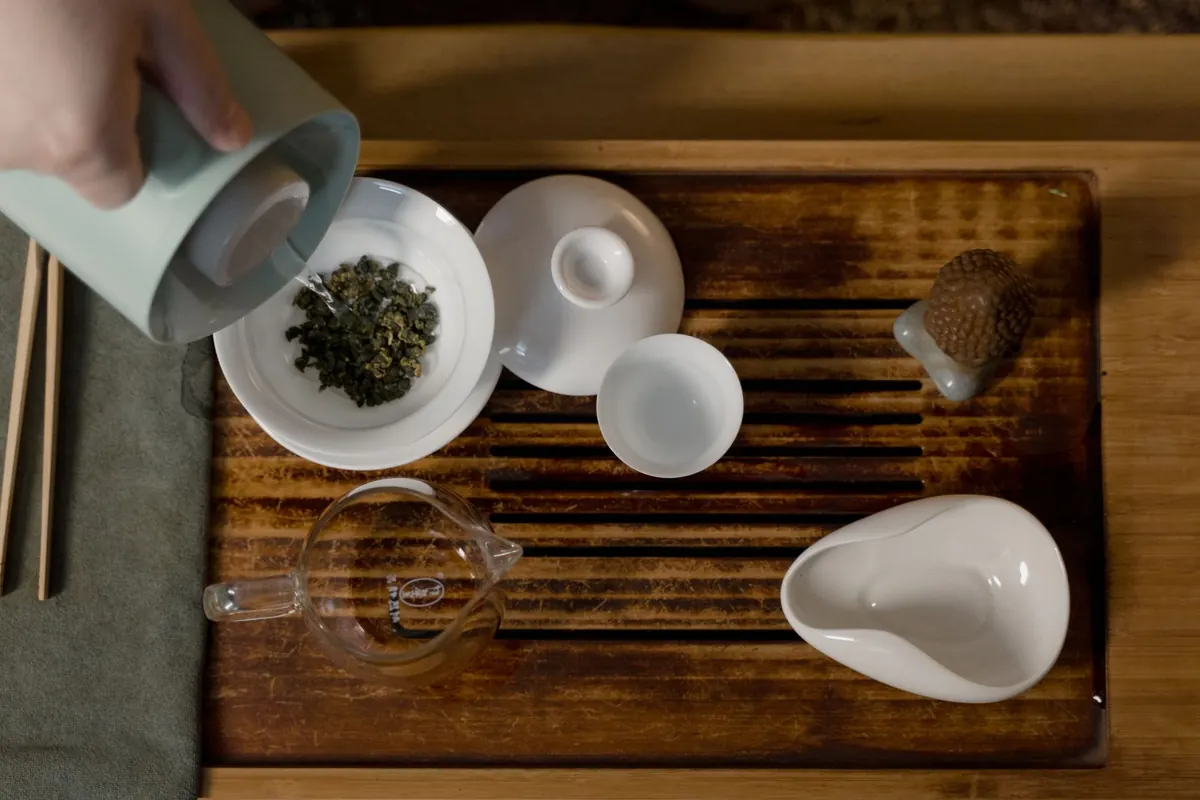
- Warm your gaiwan or small pot, then add leaf and give it a quick rinse — five seconds is plenty.
- Weigh the leaf instead of eyeballing it. A gram or two in the wrong direction changes everything at these ratios.
- Start cooler and shorter than you think you need, especially with light roasts. You can always add heat or time to the next steep.
- Add five to ten seconds per infusion as the leaf opens, and taste before you pour the next round.
- Keep a short note: roast level, temperature, leaf weight, steep times. Three sessions of notes will teach you more than a month of guessing.
If a tea tastes thin and hollow, add leaf. If it turns bitter or drying, shorten the steep first and only then drop the temperature. And if a dark roast feels flat, try more leaf rather than a longer steep — you want the depth without the stew.
Photo: Tima Miroshnichenko / Pexels